

A while back, my daughter was one click away from soft porn. She was watching Mati & Dada—a beautiful, gentle show about art history. But the creator’s old website had been hijacked.
That moment led me to build something: A free tool for watching YouTube with your kids—no thumbnails, no algorithm, no rabbit holes. Just curated playlists you control.
You can try it here, or read on for the story behind it.

How YouTube Can Easily Spiral Out of Control
A while back, my daughter was watching a beautiful Mati & Dada episode. Within one innocent click — she was one step away from soft porn.
To be clear, she did not enter the website. But she could have. One click. You can test it yourself by clicking the ‘MatiDada.com’ link on their YouTube channel, this is where you’ll land:
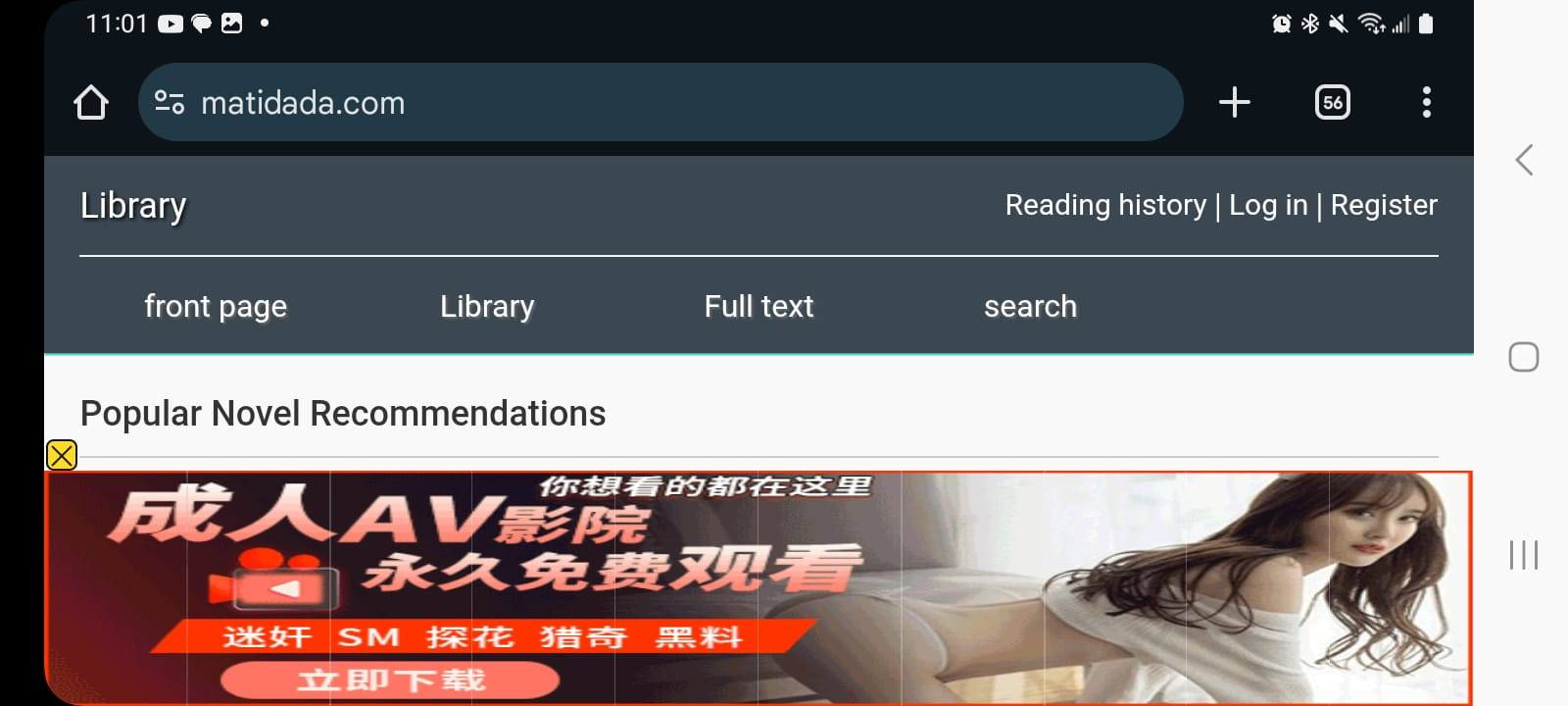
And here’s the thing: after my own website was hijacked once (turned into gambling links overnight), I now understand that many abandoned websites get repurposed by bots. Porn sites, spam sites, gambling sites — they can attach themselves to old links that once pointed to lovely, harmless content. Something similar likely happened here.
But as a parent, the cause doesn’t matter. The risk does.
Jonathan Haidt writes about this in The Anxious Generation. He didn’t set out to write a book about Gen Z at all — he originally intended to write about political polarization. But the more he looked at the data, the more the crisis among young people pulled him off-course. The mental health collapse wasn’t a side note; it became the whole book.
And one of his clearest findings is this:
We are overprotecting children in the physical world and underprotecting them in the digital world.
That is exactly what happened in my home that day.
This tool doesn’t replace parental supervision — it’s not locked down, and it still runs in a browser. But it creates a safer middle ground. I am far more comfortable giving my daughter my own curated playlist, than handing her YouTube and hoping for the best.
There is also a disturbing phenomenon researchers are beginning to document: violent or sexualized content rendered in kid-friendly animation styles. Parents may believe their child is watching something harmless, while the actual content is profoundly inappropriate. In Dopamine Nation, Dr. Anna Lembke describes a case where a 5-year-old molested a 3-year-old. The police investigation traced the child’s ‘instruction’ back to pornographic anime he had accessed through seemingly benign YouTube pathways.
I’ve also heard stories of violent or explicit scenes being animated in Looney-Tunes-like styles — familiar characters, bright colors, slapstick pacing — a disguise subtle enough that a parent glancing over might think everything is fine. But it isn’t.
The internet is not built for children.
We must build our own spaces.
Diving into the Tool
Ready to start? I’m featuring a playlist that we loved at home:
Degas & Monet; Ballet & Painting
A gentle curation of YouTube videos, still images, and quiet activities:
An introduction to Degas with Mati & Dada, plus an introduction to Impressionism and Claude Monet
Intentional pauses using Impressionist paintings
A short ballet class and a painting activity to invite a more embodied, creative life
And because it’s the season… a full hour-and-a-half Nutcracker ballet performance (sometimes you need 7 minutes, sometimes you need 90…)
I also curated supporting playlists from the featured creators:
Mati and Dada: Amazing movies with amazing characters that go back in history to talk to famous painters.
And I’ve also used the tool to re-render some stories I had crafted with AI, a process I documented in this course. You can try it yourself!
The Nest Knows Best: Bunny Coping Tricks: For little ones learning to sleep
Please Do What I Need, Not What I Want: An NVC-inspired kids book
Creator.Recursive.Eco: What is it?
Creator.Recursive.Eco is a tool for watching YouTube intentionally — no thumbnails, no rabbit holes, no algorithm pulling your child into the abyss. That’s not a bug; that’s the design.
You can’t yet see the full playlist at once, the total length, or even all titles. I know — I consider those bugs too, and I’ll fix them over time. Right now, I’m prioritizing Report and Program for safety and proper attribution.
You can peek behind the scenes here to see what I’m currently building — but fair warning: development is slow because I recently realized my entire database structure needs to be re-thought from the ground up. That’s what learning looks like in real time.
Everything here is open-source, forkable, remixable, and waiting for collaborators. If you’re technical and feel called to help, you’re truly welcome.
And if you want your playlist to appear in the public channel, you can submit it. I’ll review it manually (with love and care), though since it’s just me over here, it may take a bit.
If you feel moved, leaving a comment genuinely helps. I’m experimenting with playlists, courses, and other tools—feedback shapes where this goes.
Recursive Gratitude
As I’ve been trying to explore in my Recursive.Eco work, I see meaning as a spiral — formulating a hypothesis (or a make-believe world), stepping outward, and letting meaning be shaped by experience.
Gratitude moves in a similar way. It begins inside, but it only completes itself when it loops back into the world as an offering. Receiving becomes giving; thanks becomes thanksgiving. Mutual giving becomes sharing. Hopefully, in a virtuous reinforcing cycle. So, I am sharing this tool as one small loop in the recursive spiral of gratitude.
I also want to offer some honest attribution as thanks giving. It’s easy to say “I built this alone,” but that’s not true. Claude Code has been my co-founder. GitHub, Vercel, and Supabase make it possible for a complete beginner to deploy things that can scale to tens of thousands of people for free. And then there’s YouTube, Google Drive, and the creators whose content makes these playlists meaningful in the first place.
I thank all of them. And— strangely — even the soft-porn websites that hijacked one of my favorite kids’ creators’ abandoned domain, because without that moment of shock, I may have never built this and would still be ungrateful to YouTube…
I couldn’t have done this alone. Culture itself is a recursive process. I build on what others left, so others can build on what I leave. In a way, we create as some spiders do: weaving our webs by spiraling through the structures that preceded us. We are never truly alone; we are just the latest loop in the thread that holds us all. Hopefully, a virtuously recursive thread that can create virtuous cycles instead of running around in circles or spiraling out of control.
My hypothesis is that by holding on to virtues, such as gratitude, and making virtue itself recursive, we have a better chance to live a life worth living.
In gratitude,
PlayfulProcess